Private, individualized care for central New Jersey executives, pharmaceutical and healthcare leaders, attorneys, and senior professionals whose drinking has begun to feel harder to control. Confidential telehealth across New Jersey, with in-person sessions available in Princeton by appointment. Dr. Arnold Washton, addiction psychologist.
If you are a senior executive, physician, attorney, or pharma leader in the Princeton corridor and you have started to question your own drinking, the obvious treatment options usually do not fit. The residential programs in Pennsylvania and the Berkshires require a thirty-day disappearance that nobody at your level can justify. The local outpatient clinics ask for in-person attendance several times a week. AA-based programs assume an identity and a commitment that most patients in this population do not recognize. The big telehealth platforms assign whoever is on shift.
What central NJ professionals actually need is what we do: a private, doctorate-level addiction psychologist who has spent 50 years working with executives, partners, physicians, and senior leaders whose drinking pattern has stopped being reliably controllable. The practice is one-on-one. The work is conducted over secure telehealth in most cases, with our Princeton office available by appointment for patients who prefer in-person sessions. The model is built around the assumption that your career and reputation are not negotiable.
Patients reach Dr. Washton at the Princeton number, schedule directly, and meet in whichever format makes clinical sense. Many are based in Princeton, Lawrence, Hopewell, Montgomery, West Windsor, or East Windsor. Others come from across central New Jersey, the Pennsylvania border, or further afield through PSYPACT.
Senior leaders at Johnson & Johnson, BMS, Merck, and the smaller biotechs that ring the Princeton corridor. The travel, the global stakeholder management, and the entertainment culture of the industry combine into a drinking pattern that often only becomes visible to the patient after a serious consequence. State medical and licensing oversight makes confidentiality a non-negotiable.
Senior physicians and surgeons across central NJ hospital systems, Penn Medicine satellites, and private practices. Medical board oversight, hospital credentialing, and DEA registration mean that traditional treatment paths can introduce more risk than the drinking itself. The model here is built around protecting clinical license while doing real work.
Partners and senior associates at Princeton, Trenton, and Newark firms, plus the bench. NJ Lawyer Assistance Program reporting requirements, state bar oversight, and the small-town character of the central NJ legal community make confidentiality especially load-bearing. This is the population the practice was originally designed for.
Senior administrators, tenured faculty, and university leadership across Princeton University, Rutgers, Rider, Princeton Theological, and the surrounding institutions. The combination of public visibility, faculty politics, and the wine-culture of academic socializing produces a specific drinking pattern that benefits from clinical attention before it becomes a tenure or board issue.
Most of the executives and professionals I treat in central NJ do not look "alcoholic" in any traditional sense. They are not daily drinkers. Many can go a week or two without alcohol and never miss it. The problem shows up situationally: the industry conference, the donor dinner, the medical society event, the long pharma-launch celebration, the off-site retreat where the second night runs longer than the first.
In those settings, the off-switch fails. The person who set out to have one or two drinks finishes the evening at six. By the tenth or twentieth time, what looked like an occasional excess is a pattern, and the pattern is doing real damage. The damage is rarely dramatic. It is the loose comment overheard by the wrong board member. The judgment lapse that becomes the subject of a Monday-morning conversation. The HR complaint. The slow accumulation of incidents that, taken together, threaten a career that took thirty years to build.
For the full clinical breakdown of this pattern as I see it in this population, see Heavy Drinking Among Executives and Professionals.
The Washton Group provides private, individualized treatment for central NJ executives and professionals whose alcohol or substance use has begun to feel harder to control than it should. The practice is built for high-functioning patients who require privacy, scheduling flexibility, and a treatment model that respects the realities of demanding professional life. There are no public groups. There is no fixed protocol. There is no requirement to adopt a label that does not fit.
Treatment is structured around your own goals. That may mean learning to moderate drinking with structured limits and clear rules about which settings are off-limits. It may mean a defined period of abstinence to reset. It may mean moving toward longer-term abstinence as the clinical picture clarifies. The work focuses on understanding your own pattern, restoring reliable control, and addressing the underlying drivers that fuel problematic use, including stress, sleep, anxiety, and the social architecture of the work itself.
Sessions are conducted by Dr. Arnold Washton over secure telehealth in most cases, which protects confidentiality and accommodates schedules that do not permit predictable in-person appointments. For patients who specifically prefer in-person work, the Princeton office is available by appointment.
Clinical Psychologist · Addiction Treatment Specialist · 50+ Years of Practice
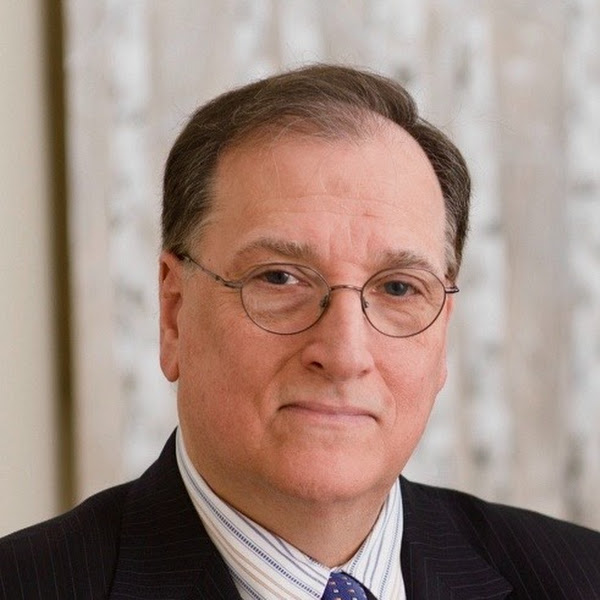
Dr. Washton has practiced addiction psychology for more than five decades. Trained at NYU and a former member of the NYU School of Medicine faculty, he founded the Washton Institute and has worked with executives, attorneys, physicians, and senior professionals throughout his career. He has authored nine books on addiction treatment, including the Guilford Press clinician's guide that is used as a training text in the field, and has consulted to the White House, the FDA, and the U.S. Senate on substance use policy.
He is licensed to practice psychology in New Jersey and New York, authorized for telepsychology in most PSYPACT states, and listed in the Psychology Today directory for both Princeton and Manhattan. Central NJ patients reach him directly through the contact form below.
"The clinical question I focus on is not whether you fit a category. It is whether you can reliably regulate intake once drinking begins. That is the question worth answering."
The full clinical breakdown of the episodic binge pattern, the "not that bad" trap, and what individualized treatment looks like.
The broader treatment philosophy and approach for high-functioning professionals across all industries.
Why the label matters less than the pattern, and how to read your own drinking honestly.
The clinical case for reducing drinking-related harm without requiring abstinence as the starting goal.