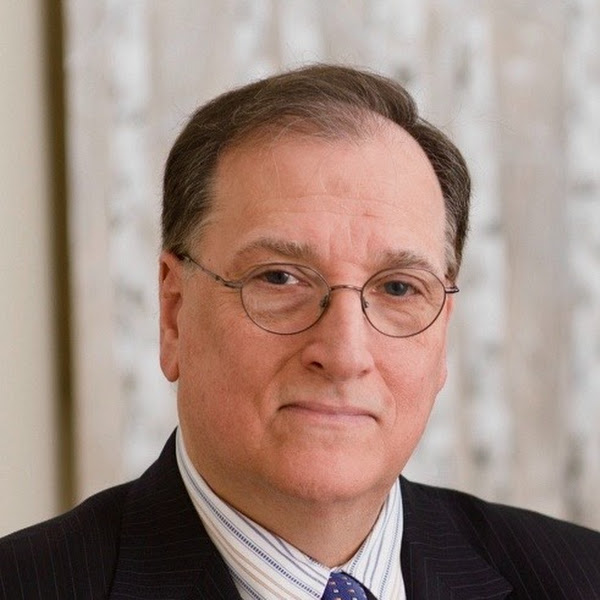
Private, doctorate-level care for central New Jersey adults dealing with alcohol, drugs, or behavioral addictions, often alongside anxiety, depression, or trauma. Princeton office available by appointment, telehealth across NJ and PSYPACT states. Dr. Arnold Washton, 50+ years of clinical practice.
If you are searching for an addiction psychologist in central New Jersey, the available options divide into a few categories that do not always match what you actually need. Hospital-affiliated outpatient programs are slow and intake-heavy. Residential rehab centers in PA, NY, or further afield require a thirty-day disappearance with mixed results. The big telehealth platforms match by availability rather than fit. Local psychiatry practices tilt toward medication-first models. AA-based programs require an identity and a structure that not all patients want or need.
What many central NJ adults are actually looking for is what we do: a private, doctorate-level addiction psychologist working one-on-one, evidence-based, with a Princeton office for patients who prefer in-person care and secure telehealth for patients whose schedules or geography make remote work the better fit. The clinical model is not built around a fixed protocol. It is built around understanding your actual situation and addressing that picture with the right combination of psychotherapy, structure, and medication when appropriate.
Patients reach Dr. Washton through the Princeton office and meet in whichever format makes sense. Many patients are based in Princeton, Lawrence, Hopewell, Montgomery, West Windsor, or East Windsor. Others come from across central New Jersey, the Pennsylvania border, or further afield through PSYPACT.
High-functioning adults whose drinking has become harder to control but who do not match the daily-drinker, withdrawal-symptoms, lost-everything image that the word "alcoholic" usually conjures. The clinical question we focus on is whether you can reliably regulate your drinking, not whether you fit a label. More on the heavy drinker vs. alcoholic distinction →
Cocaine and stimulant patterns common in central NJ professional environments, and opioid patterns that often start with a prescribed medication and become harder to step away from than expected. Treatment is structured around the specific drug, the specific pattern, and the role it plays in the patient's life. More on cocaine and opioid treatment →
Most patients I treat have more than one thing operating at once. The drinking that started as a way to manage anxiety. The depression that drives drug use. The trauma history that keeps surfacing in the present. Treating the substance use without treating what is underneath rarely produces durable change, which is why doctorate-level psychological training matters for this work.
Many of the patients I see have either tried AA and found it wasn't the right fit, or correctly anticipated that it would not work for them. The treatment model here is independent of 12-step. It is evidence-based individual psychotherapy, with medication when appropriate, structured around the patient's actual clinical picture. More on alternatives to AA →
There is no fixed protocol. There is no requirement to adopt a label. There is no public group component. The work is private, one-on-one, and conducted in whichever format the patient and clinician decide makes sense at each stage of treatment.
Treatment begins with a careful assessment of what the substance use actually looks like in your life, frequency, settings, triggers, consequences, what it is doing for you, what it is costing. From there, the work is structured around your goals and the clinical picture that emerges. For some patients, the goal is reliable moderation with structured limits. For others, abstinence. For others, a defined period of abstinence followed by reassessment. The goal is treated as a clinical question, not a precondition.
Medication is used when clinically indicated, naltrexone, acamprosate, gabapentin for alcohol; buprenorphine where appropriate for opioids; SSRIs or other psychiatric medication for co-occurring anxiety and depression. Medication is a tool in the work, not the substitute for it. More on medication-assisted treatment →
Clinical Psychologist · Addiction Treatment Specialist · 50+ Years of Practice
Dr. Washton has practiced addiction psychology for more than five decades. Trained at NYU and a former member of the NYU School of Medicine faculty, he founded the Washton Institute and has worked with adults across the full spectrum of substance use and behavioral addictions. He has authored nine books on addiction treatment, including the Guilford Press clinician's guide that is used as a training text in the field, and has consulted to the White House, the FDA, and the U.S. Senate on substance use policy.
He is licensed to practice psychology in New Jersey and New York, authorized for telepsychology in most PSYPACT states, and listed in the Psychology Today directory for both Princeton and Manhattan.
"The clinical question I focus on is not whether you fit a category. It is whether you can reliably regulate your behavior, and whether the consequences have begun to outweigh what the substance is doing for you. That is the question worth answering."
Industry-specific care for pharma, healthcare, legal, and academic leadership in central NJ.
The episodic binge pattern, the "not that bad" trap, and individualized treatment for high-functioning professionals.
The clinical case for reducing drinking-related harm without requiring abstinence as the starting goal.
Evidence-based treatment options for patients who do not fit the 12-step model.